Foreign Transaction Fees: What They Cost and How to Avoid Them
What a foreign transaction fee is, why it's usually about 3%, how debit cards and ATMs add more, and how to pay nothing extra abroad or online.
 Live FX Editorial Team · · 4 min read
A foreign transaction fee is a percentage (typically 1% to 3%) that your card issuer adds when you pay in a foreign currency or buy from a merchant abroad, including online. You avoid it by using a credit or debit card that charges no foreign transaction fee, paying in the local currency, and withdrawing cash with a card that doesn't add foreign or out-of-network ATM fees.
On this page
You come home from a trip, open your card statement and find a line of small charges you didn’t expect: “foreign transaction fee”, “international transaction fee” or “FX fee”. Each one is only a few dollars, but on a week abroad they easily add up to the price of a nice dinner, and they are almost entirely avoidable.
Exchange rates in the examples are mid-market rates from Live FX as of November 12, 2026. Bank fees are taken from each bank’s published fee pages in November 2026; they change, so check your own card’s current terms.
What a foreign transaction fee is
A foreign transaction fee is a percentage that your card issuer (your bank) charges when a transaction is processed abroad. Under US rules it is a type of finance charge, and it can apply to:
- purchases in a foreign currency, such as paying in euros in Paris;
- purchases in US dollars outside the US, such as a hotel in Mexico that charges you in dollars;
- purchases from foreign merchants online, even when the website shows dollars.
Card issuers must disclose the fee in their pricing terms, usually as a single percentage.
Why it’s usually 3%
Two different companies touch a foreign card payment:
- The card network (Visa, Mastercard) converts the amount into dollars at its daily rate and charges the bank a cross-border assessment.
- Your issuer may pass that cost on and add a margin of its own.
The Consumer Financial Protection Bureau’s own example in its official interpretation of Regulation Z is a network charging 1% and an issuer adding 2%, for a 3% total to the consumer. Capital One describes foreign transaction fees as typically 1%–3% of the transaction amount. Issuers that charge 0% absorb the network’s cost themselves.
Debit cards and ATMs: the double hit
Debit cards are where travelers lose the most, because the fees stack. Here is what three big US banks list for their standard checking accounts:
| Bank (standard checking) | Foreign debit card purchases | Withdrawal at another bank’s ATM abroad |
|---|---|---|
| Bank of America | 3% of the converted amount | $5 per withdrawal (waived at partner ATMs) |
| Wells Fargo Everyday Checking | 3% of the US dollar amount | $5 per withdrawal |
| Chase Total Checking | Foreign exchange rate adjustment fee applies | $5 per withdrawal |
| Schwab Bank Investor Checking | No foreign exchange fee | No fee from Schwab; ATM operator fees rebated |
On top of your bank’s fees, the ATM owner abroad may charge its own access fee, and the machine may try to convert the withdrawal for you at a poor rate. Always decline the conversion (see dynamic currency conversion).
What it costs: a worked example
A week in Europe: $1,500 of card purchases and $500 in cash taken out in two ATM withdrawals.
| Setup | Card purchases | Cash withdrawals | Total extra cost |
|---|---|---|---|
| Credit card with 3% fee + standard debit card (3% + $5 per ATM) | $45 | $15 + $10 = $25 | $70 + any ATM operator fees |
| No-fee credit card + standard debit card | $0 | $25 | $25 + any ATM operator fees |
| No-fee credit card + no-fee debit card with ATM rebates | $0 | $0 | $0 |
At the November 12, 2026 rate of $1.1077 per euro, $70 is about €63, roughly two restaurant dinners for two, or a day’s museum and transport budget.
How to avoid foreign transaction fees
- Check your cards now. Search your card’s pricing terms (or the issuer’s app) for “foreign transaction” or “international transaction”. It takes two minutes.
- Carry one credit card with no foreign transaction fee. Capital One, for example, says it charges no foreign transaction fees on any of its credit cards, and many travel cards from other issuers also charge 0%. Avoid opening credit you don’t need, though: a fee-free card you already have is the best one.
- Get a debit card for cash. If you’ll withdraw cash, a checking account with no foreign fee and ATM rebates (Schwab Bank Investor Checking is one well-known US example) makes ATMs nearly free. Otherwise, use your bank’s international partner ATMs where fees are waived.
- Always pay in the local currency. Choosing dollars at a terminal or ATM adds a conversion markup and may still trigger your bank’s fee.
- Withdraw less often, in larger amounts, if your bank charges a flat fee per withdrawal, but don’t carry more cash than you’re comfortable with.
- Watch foreign websites. Shopping or booking on a site based abroad can trigger the fee even if the price is in dollars. Use your no-fee card for those, too.
- Bring a backup. Carry a second card on a different network (Visa and Mastercard) in case one is declined.
How to see the real cost before you pay
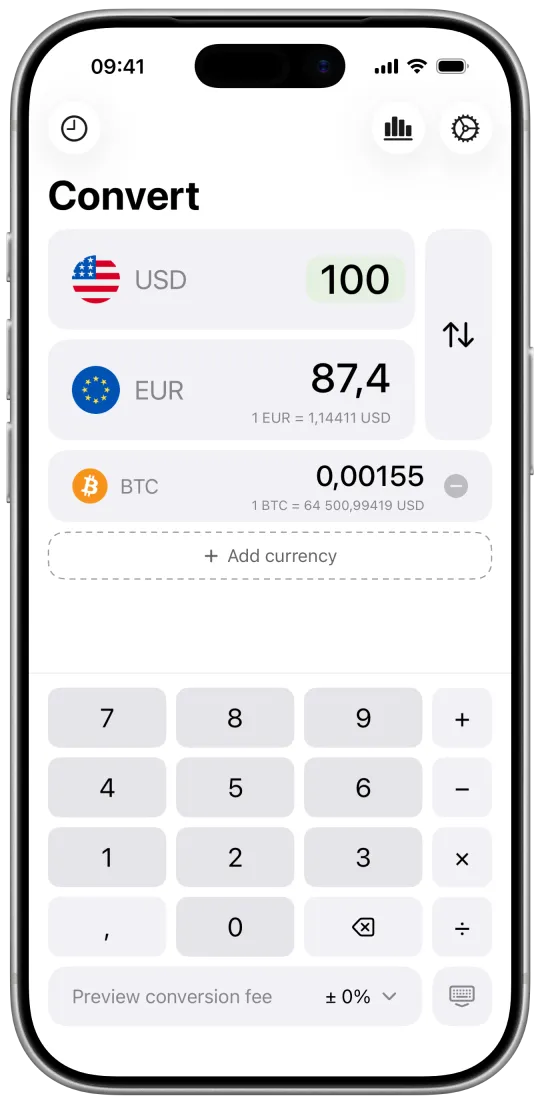
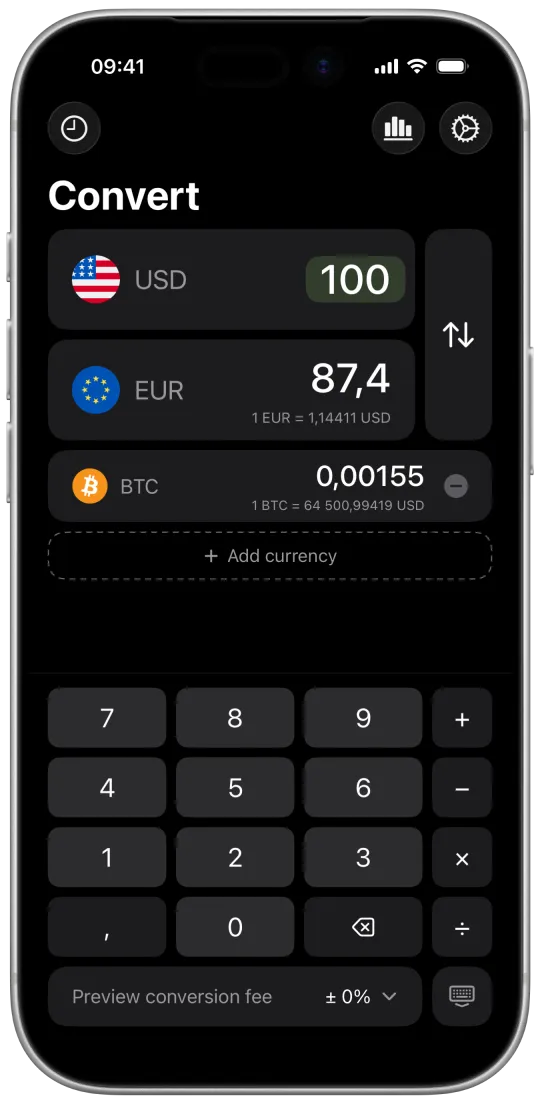
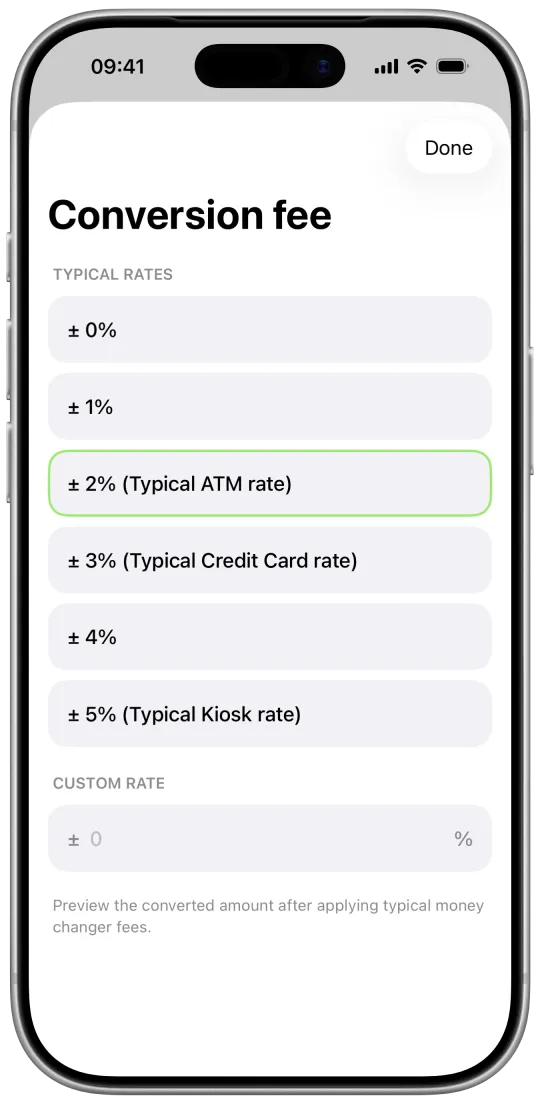
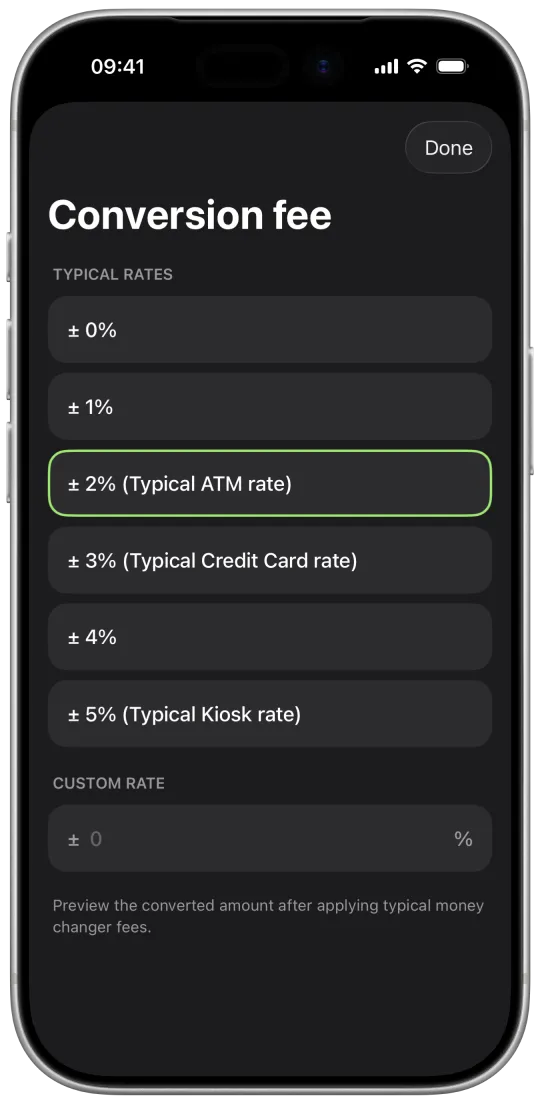
A 3% fee is easy to forget at the moment of paying. The Live FX iPhone app has a conversion-fee preview: choose a typical card (±3%), ATM (±2%) or kiosk (±5%) rate, or type your card’s exact percentage, and every conversion shows what you’ll really pay. It works offline, so you can check prices in a shop without data roaming.
For quick checks on the web, use the converters for your trip: USD to EUR, USD to GBP, USD to CAD, USD to MXN or USD to JPY. And if you still need cash before you leave, read our guide to the best way to exchange currency.
Frequently asked questions
How much is a foreign transaction fee?
Usually 1% to 3% of each purchase. Many standard US credit and debit cards charge 3%; many travel credit cards and some checking accounts charge 0%. The fee is listed in your card's pricing terms, often as a 'foreign transaction fee' or 'international transaction fee'.
Do debit cards charge foreign transaction fees?
Many do. For example, Bank of America and Wells Fargo list a 3% international transaction fee on foreign debit card purchases, plus a $5 fee for withdrawals at another bank's ATM abroad. Some accounts, such as Schwab Bank Investor Checking, charge no foreign exchange fee on debit purchases and rebate ATM fees.
Do I pay a foreign transaction fee on online purchases?
You can. Under US card rules, the fee can apply to purchases from foreign merchants even when the price is shown in US dollars, for example when you shop on a website based abroad. Check whether your card charges the fee on all foreign transactions or only on foreign-currency ones.
How do I avoid foreign transaction fees?
Use a card with no foreign transaction fee, always pay in the local currency rather than your home currency, use your own bank's partner ATMs or a debit card that refunds ATM fees, and withdraw larger amounts less often if your bank charges per withdrawal.
Is the foreign transaction fee the same as a bad exchange rate?
No, they stack. The card network converts your purchase at its daily rate, close to the mid-market rate, and then your issuer adds its foreign transaction fee on top. Dynamic currency conversion at a shop or ATM is a third, separate cost.
Sources
- CFPB: Regulation Z, Official Interpretation of §1026.4 (foreign transaction fees as finance charges, comment 4(a)-4)
- Capital One: Foreign transaction fees: what to know
- Capital One: Traveling with your card
- Charles Schwab Bank: Deposit Account Pricing Guide (January 2026)
- Bank of America: Using your card at international ATMs
- Wells Fargo: Everyday Checking account fees summary
- Chase: Total Checking fees
Rates quoted in this guide are mid-market reference rates from Live FX’s data (the open currency-api dataset for fiat and metals, CoinGecko for crypto) and are for information only. Fees change, so check your own bank’s current terms before you travel.
Rates in your pocket, even offline
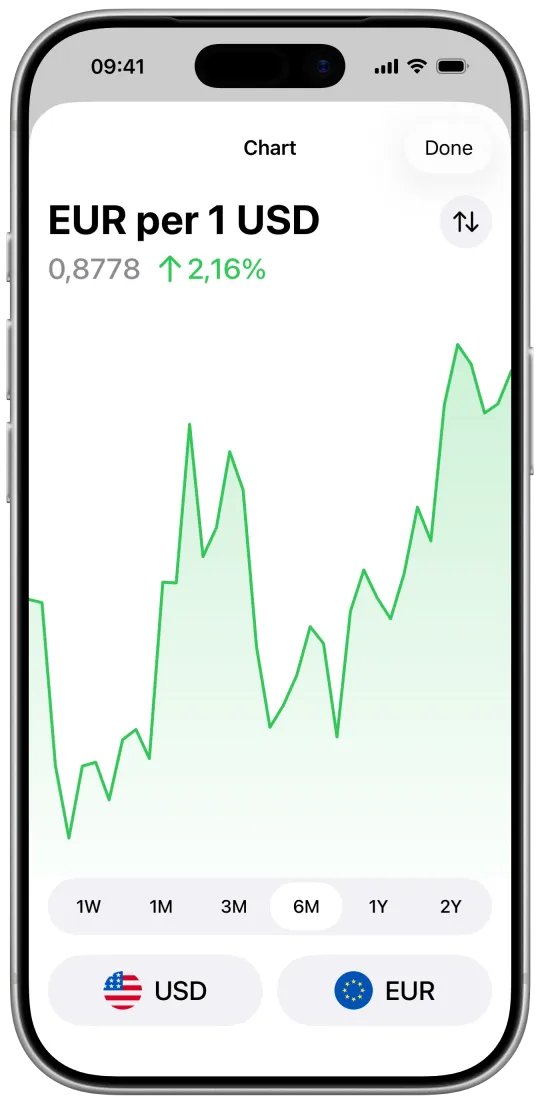
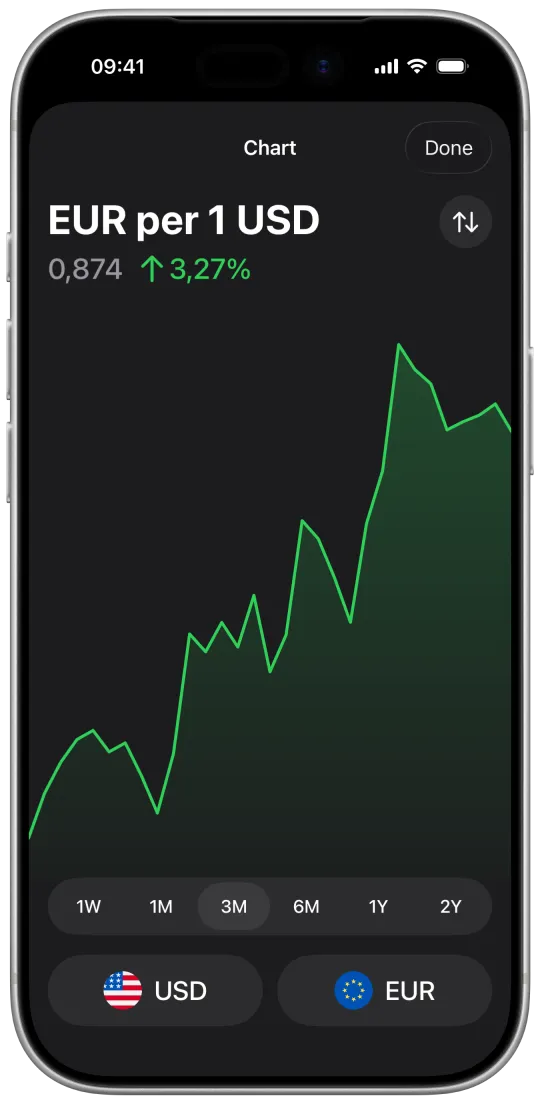
Live FX for iPhone converts 340+ currencies, crypto and gold in one tap, with charts, home-screen widgets and custom rates. Works without a connection using the last rates.