Pay in Local Currency or Dollars? Dynamic Currency Conversion
When a card terminal or ATM abroad offers to charge you in your home currency, say no. What dynamic currency conversion is, what it costs, how to spot it.
 Live FX Editorial Team · · 5 min read
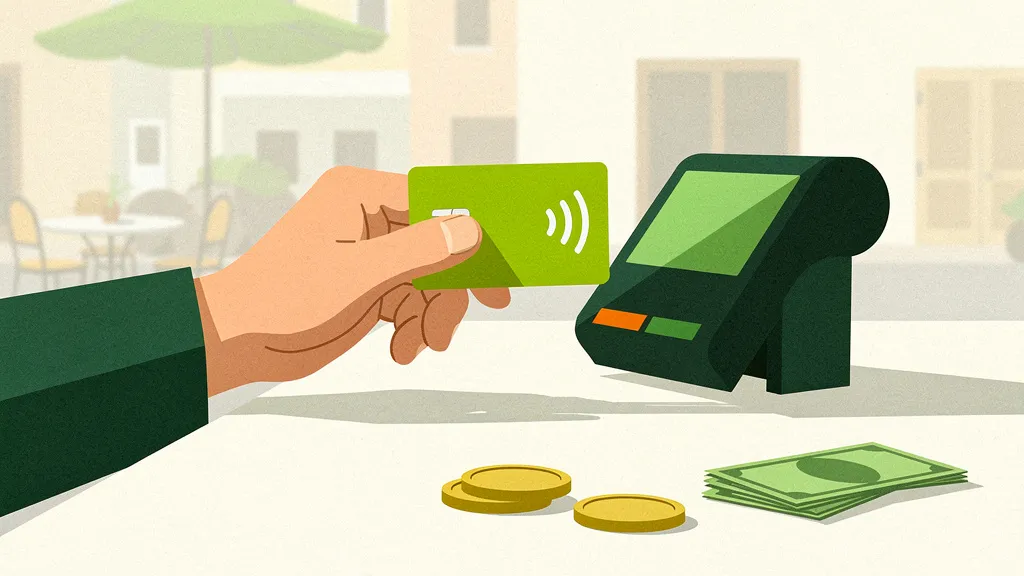
Always choose to pay in the local currency. When a terminal, ATM or website offers to charge you in your home currency, that is dynamic currency conversion (DCC): the merchant's provider sets the exchange rate and usually builds in a markup of several percent, which is almost always more than your own card's conversion cost.
On this page
You are paying for dinner in Rome. The waiter brings the card machine, and the screen asks:
Pay in EUR or USD?
Paying in dollars feels safer: you know exactly what you will be charged. That feeling is what the question is designed to exploit. Choosing your home currency activates dynamic currency conversion (DCC), and it is one of the most reliable ways to overpay abroad.
Rates in this guide are mid-market rates from Live FX as of November 12, 2026.
The rule
When a card terminal, ATM or website abroad offers to charge you in your home currency, decline it and pay in the local currency.
That applies to restaurants, hotels, shops, car-rental desks, ATMs and foreign online stores. The only time it can make sense is if your own card charges a very high conversion fee and the DCC offer is genuinely close to the mid-market rate, which is rare, and you can check it with the method below.
What dynamic currency conversion is
Normally, when you pay €100 with a US card, the merchant charges €100. Your card network (Visa, Mastercard, Amex) converts it to dollars at its daily rate, which is close to the mid-market rate, and your bank may add a foreign transaction fee.
With DCC, the merchant’s payment provider converts the amount before it reaches your bank, at its own rate, and charges you in dollars. The provider sets that rate and keeps the margin; the merchant usually gets a share. You can’t negotiate it, and the receipt rarely spells out the markup unless local rules require it.
| Pay in local currency (EUR) | Pay in home currency (USD): DCC | |
|---|---|---|
| Who sets the rate | Your card network | The merchant’s DCC provider |
| Rate quality | Close to mid-market | Mid-market plus a markup, often several percent |
| Your bank’s foreign fee | Charged if your card has one (0% on many travel cards) | Often still charged, because the merchant is abroad |
| Transparency | Rate visible on your statement | Rate shown at the till, markup often hidden |
What it costs: a worked example
Your dinner bill is €100. On November 12, 2026 the mid-market EUR to USD rate was 1.1077, so the fair dollar value is $110.77.
| How you pay | What you’re charged |
|---|---|
| In EUR with a card that has no foreign transaction fee | about $110.77 (network rate is close to mid-market) |
| In EUR with a card that charges a 3% foreign fee | about $114.09 |
| In USD via DCC with a 5% markup | $116.31 |
| In USD via DCC with a 5% markup plus a 3% foreign fee | about $119.80 |
Over a two-week trip with €2,000 of card spending, a 5% DCC markup alone adds up to about $111, for nothing.
Is 5% realistic? Independent tests suggest it is middle-of-the-road. The European consumer organisation BEUC reported that when German testers from Stiftung Warentest were offered DCC in 13 non-euro countries, it made payments 2.6% to 12% more expensive. A Norwegian bank’s study of 1,500 ATM withdrawals found that choosing the home currency was the more expensive option in 99.7% of cases, by about 7% on average.
How to spot DCC
DCC shows up in more places than the restaurant terminal:
- Card terminals. The screen shows two amounts or asks you to choose a currency. Sometimes the staff choose for you, so watch the screen.
- ATMs. After you enter the amount, the machine offers a “guaranteed rate” or “conversion” into your home currency. Choose “without conversion” or “decline”. The same machines often add a separate access fee, so check that too.
- Hotel and car-rental checkout. The final bill may be “pre-converted” into your currency. Ask for the bill in local currency before you sign.
- Online stores and booking sites. Foreign websites sometimes default to showing and charging prices in your currency. If you can, switch the checkout currency to the merchant’s local currency.
- Receipts that show both currencies, an exchange rate and words like “Currency conversion”, “Cardholder currency” or “I accept the rate offered”.
Tip: If a terminal shows only your home currency, ask the staff to restart the payment in the local currency. Card network rules require DCC to be optional.
How to check a DCC offer in 10 seconds
If the terminal shows both amounts, you can measure the markup:
- Divide the home-currency amount by the local amount: $116.31 ÷ €100 = 1.1631 dollars per euro.
- Compare with the mid-market rate on Live FX or Google: 1.1077.
- Markup = (1.1631 − 1.1077) ÷ 1.1077 = 5.0%.
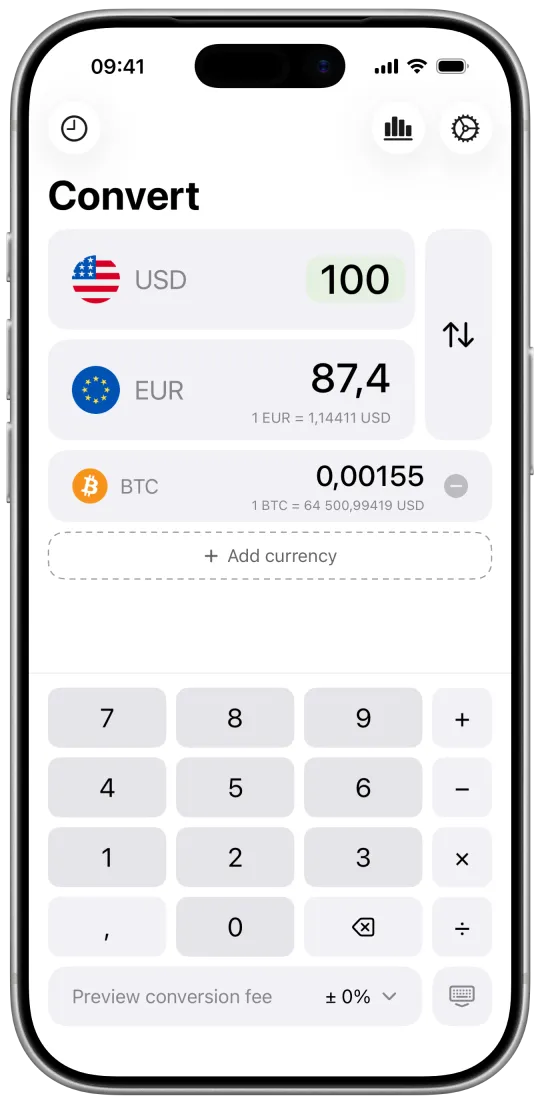
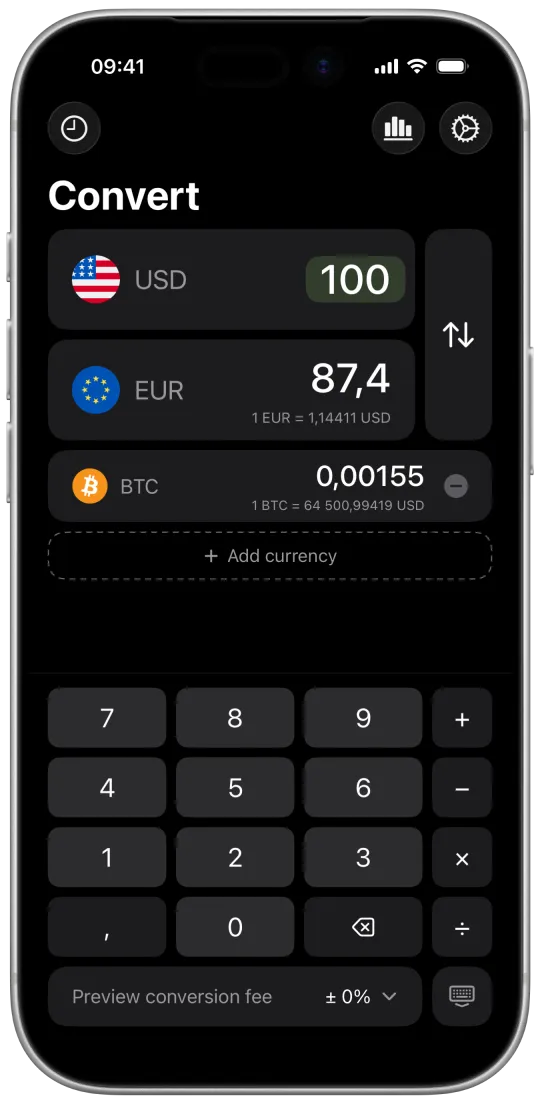
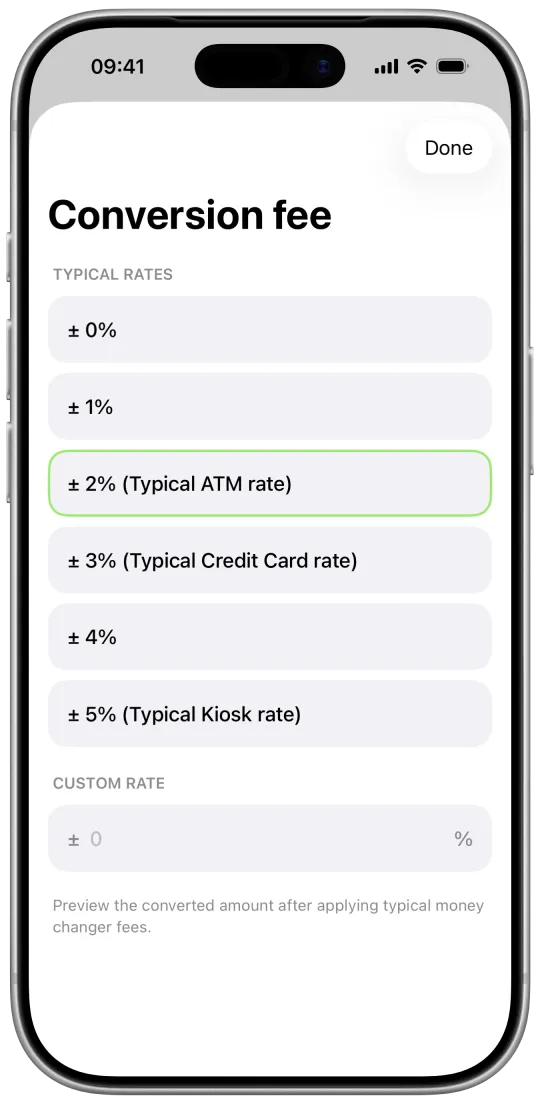
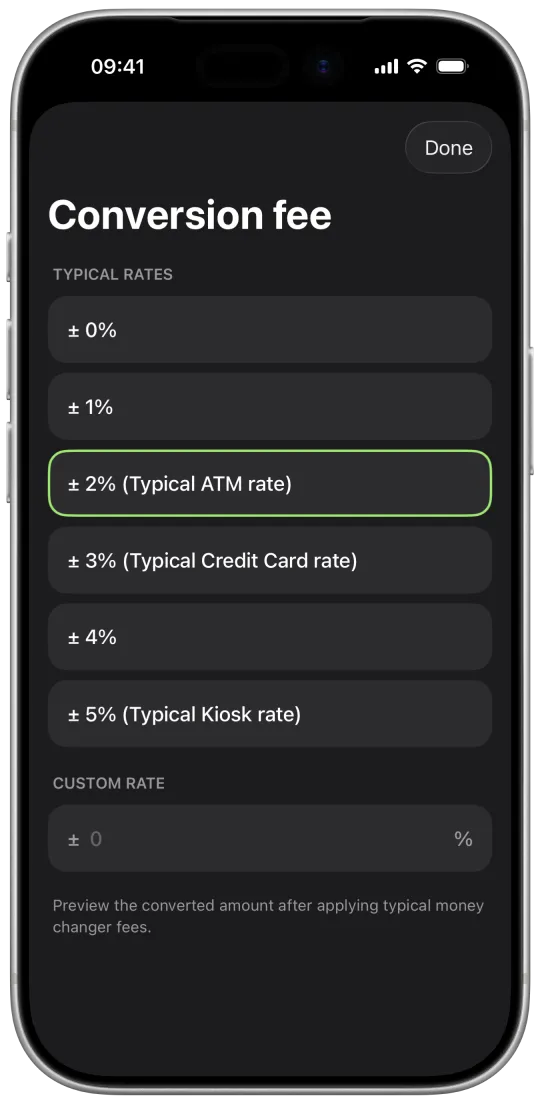
If the markup is bigger than your card’s foreign transaction fee (and it almost always is), pay in local currency. The Live FX iPhone app shows the mid-market rate even offline, and its fee preview lets you apply a percentage to see what an offer really costs.
The rules that protect you
- Card network rules. Visa tells cardholders that merchants and ATMs should give you a choice to accept or decline currency conversion, “must not choose on your behalf”, and must show the exchange rate and any markup. Mastercard has similar rules.
- European Union. Under Regulation (EU) 2019/518 (since codified in Regulation 2021/1230), anyone offering currency conversion at an ATM or point of sale in the EU must disclose the total conversion charges as a percentage markup over the latest European Central Bank reference rate before you pay, and tell you that you can pay in the local currency instead. If you see that percentage, compare it with your card’s fee.
- Disputes. If you were charged in your home currency without being offered the choice, your card issuer may be able to dispute the conversion. Keep the receipt.
Quick checklist for your trip
- Set your mind before you travel: local currency, every time.
- At ATMs, pick “decline conversion”, even if the machine warns that your bank’s rate “may be higher”.
- Watch the terminal when staff handle your card.
- Ask hotels and car-rental desks to bill in local currency.
- Use a card with no foreign transaction fee, so paying in local currency costs you nothing extra. Our guide to the best way to exchange currency compares the options.
- Check the mid-market rate for your destination before you go: USD to EUR, GBP to EUR, USD to JPY or USD to MXN.
Frequently asked questions
Should I pay in local currency or USD when traveling?
Pay in local currency. If you choose US dollars, the shop's payment provider converts the amount at its own rate, typically with a markup of several percent. If you pay in the local currency, your card network converts it close to the mid-market rate, and at most your bank adds its foreign transaction fee (0% on many travel cards).
What is dynamic currency conversion?
Dynamic currency conversion (DCC) is a service offered by card terminals, ATMs and online checkouts abroad that converts a purchase into the cardholder's home currency at the point of sale. It is optional, and the merchant or its provider earns money from the exchange-rate markup.
Does DCC avoid the foreign transaction fee?
Often not. Many banks still charge their foreign transaction fee on purchases made with a foreign merchant even when the amount is in your home currency, so with DCC you can pay twice: the DCC markup and your bank's fee.
What should I press at a foreign ATM that offers conversion?
Choose 'without conversion', 'decline conversion' or the local currency option. The ATM's own conversion rate is usually poor; letting your card network convert the withdrawal is normally cheaper.
What if a shop processed my card in dollars without asking?
Card network rules require that DCC is offered as a choice. If you were charged in your home currency without agreeing, keep the receipt and contact your card issuer; you may be able to dispute the transaction.
Sources
- Regulation (EU) 2019/518 on currency conversion charges (Art. 3a), now codified in Regulation (EU) 2021/1230
- Visa: Dynamic Currency Conversion
- BEUC: Dynamic Currency Conversion: when paying abroad costs you more than it should (2017)
- BEUC: Commission plans to tackle high, unfair fees for cross-border payments and currency conversion (2017)
Rates quoted in this guide are mid-market reference rates from Live FX’s data (the open currency-api dataset for fiat and metals, CoinGecko for crypto) and are for information only. Fees change, so check your own bank’s current terms before you travel.
Rates in your pocket, even offline
Live FX for iPhone converts 340+ currencies, crypto and gold in one tap, with charts, home-screen widgets and custom rates. Works without a connection using the last rates.