The Strongest Currencies in the World (Ranked by Value)
The world's highest-valued currencies ranked by the value of one unit in US dollars, why the Kuwaiti dinar is No. 1, and what 'strong' really means.
 Live FX Editorial Team · · 4 min read
By the value of one unit, the strongest currency in the world is the Kuwaiti dinar (KWD), worth about $3.21 on November 12, 2026, followed by the Bahraini dinar ($2.66), the Omani rial ($2.60), the Jordanian dinar ($1.41) and the British pound ($1.33). A high unit value mostly reflects how the currency was set up and pegged, not how strong the economy is.
On this page
“Strongest currency” is one of the most searched money questions, and the answer surprises most people: it isn’t the US dollar, the euro or the Swiss franc. Ranked by what a single unit is worth, the top of the table belongs to small, oil-rich Gulf states.
The ranking below is computed from Live FX’s mid-market rates as of November 12, 2026. Each currency links to its live page, so you can check today’s value.
The 10 highest-valued currencies
| Rank | Currency | Code | Value of 1 unit in USD | Exchange-rate regime |
|---|---|---|---|---|
| 1 | Kuwaiti dinar | KWD | $3.2113 | Pegged to an undisclosed basket |
| 2 | Bahraini dinar | BHD | $2.6596 | Pegged to the US dollar |
| 3 | Omani rial | OMR | $2.5984 | Pegged to the US dollar |
| 4 | Jordanian dinar | JOD | $1.4104 | Pegged to the US dollar |
| 5 | British pound | GBP | $1.3257 | Free float |
| 6 | Cayman Islands dollar | KYD | $1.2040 | Pegged to the US dollar |
| 7 | Swiss franc | CHF | $1.2005 | Float (managed by the SNB) |
| 8 | Euro | EUR | $1.1077 | Free float |
| 9 | US dollar | USD | $1.0000 | Free float |
| 10 | Singapore dollar | SGD | $0.7780 | Managed against a basket |
A few notes on how we built this list:
- Currencies at par with another are grouped. The Gibraltar pound, Falkland Islands pound, Saint Helena pound and the Jersey, Guernsey and Isle of Man pounds all trade one-for-one with sterling, so they share the pound’s spot. Likewise the Bermudian dollar, Bahamian dollar and Panamanian balboa equal one US dollar, and the Brunei dollar equals the Singapore dollar.
- The IMF’s SDR (XDR) is excluded: it is a reserve accounting unit, not money you can spend.
- Pegged currencies move by tiny amounts from day to day, so values a little off their official peg reflect market quotes on that date.
Why the Kuwaiti dinar is number one
Three things keep the dinar at the top:
- How it started. When Kuwait introduced the dinar in 1961 it was given a high value per unit. A currency’s starting denomination is arbitrary, but once set, a stable currency tends to stay in the same range.
- Oil and reserves. Kuwait exports large amounts of oil, priced in dollars, and has substantial sovereign wealth. Steady foreign income means steady demand for dinars.
- A managed peg. The Central Bank of Kuwait does not let the dinar float freely. Since May 2007 it has pegged the dinar to an undisclosed, weighted basket of the currencies of Kuwait’s main trade and financial partners (from 2003 to 2007 it was pegged to the US dollar alone). That keeps the dinar stable and avoids sharp swings.
If you send money between the Gulf and South Asia, the dinar’s value shows up directly: one Kuwaiti dinar converts into a large number of Indian rupees, which is why KWD to INR is one of the most searched conversions in the region.
Bahrain, Oman and Jordan: the power of a dollar peg
The next three currencies are fixed to the US dollar at a rate their central banks defend:
- Bahraini dinar: 0.376 BHD per US dollar, so 1 BHD ≈ $2.66, effectively unchanged since 1980
- Omani rial: officially 1 OMR = $2.6008 (about 0.3845 rials per dollar), unchanged since 1986
- Jordanian dinar: about 0.709 JOD per US dollar, so 1 JOD ≈ $1.41, pegged since 1995
Because they are pegged, these currencies rise and fall against the euro, pound or yen exactly as the dollar does. Their high unit value comes from the level at which the peg was set, backed by reserves to defend it.
The pound, franc and euro: big floating currencies
The British pound is the highest-valued freely floating major currency and one of the oldest currencies still in use. The Swiss franc has a reputation as a safe haven: in times of market stress, investors often buy francs, which has pushed its value above the dollar. The euro, used by 21 EU countries since Bulgaria joined on January 1, 2026, has traded above one dollar for most of its history.
These three are “strong” in the sense people usually mean (widely traded, trusted and convertible), not just high in unit value.
Strong vs valuable: the misunderstanding
A high value per unit tells you very little about an economy:
- The Japanese yen is worth well under one US cent (about 160 yen per dollar on our reference date), yet Japan has one of the world’s largest economies.
- The US dollar ranks only ninth by unit value, but it is the dominant global currency: the Bank for International Settlements found it on one side of 89% of all currency trades in its April 2025 survey, and it is the largest reserve currency held by central banks.
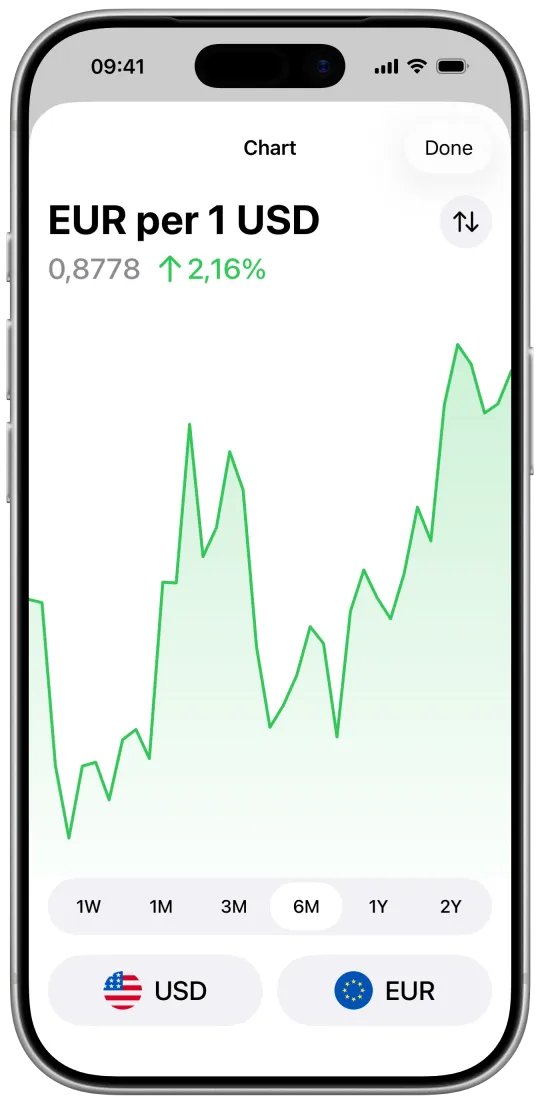
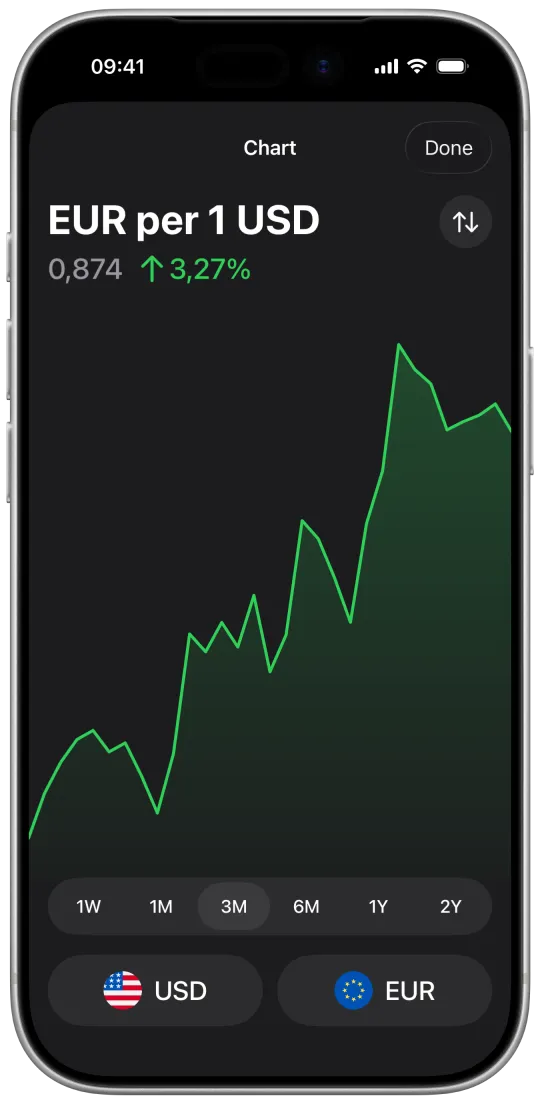
What matters for “currency strength” in economics is change over time: a currency that gains 10% against its trading partners has strengthened, whatever its starting number. You can see this for any pair on its chart, for example GBP to USD or CHF to USD.
The weakest currencies by unit value
At the other end of the table are currencies that need thousands, or millions, of units to buy one dollar (November 12, 2026):
| Currency | Code | Units per 1 USD |
|---|---|---|
| Iranian rial | IRR | about 1,906,000 |
| Lebanese pound | LBP | about 91,000 |
| Vietnamese dong | VND | about 25,700 |
| Lao kip | LAK | about 22,800 |
| Indonesian rupiah | IDR | about 18,250 |
| Syrian pound | SYP | about 13,000 |
| Uzbekistani som | UZS | about 12,000 |
Some of these reflect years of high inflation and sanctions (Iran, Lebanon, Syria), where official and street rates can differ widely. Others, like the Vietnamese dong and Indonesian rupiah, are simply small denominations in stable, fast-growing economies.
Checking any currency’s value
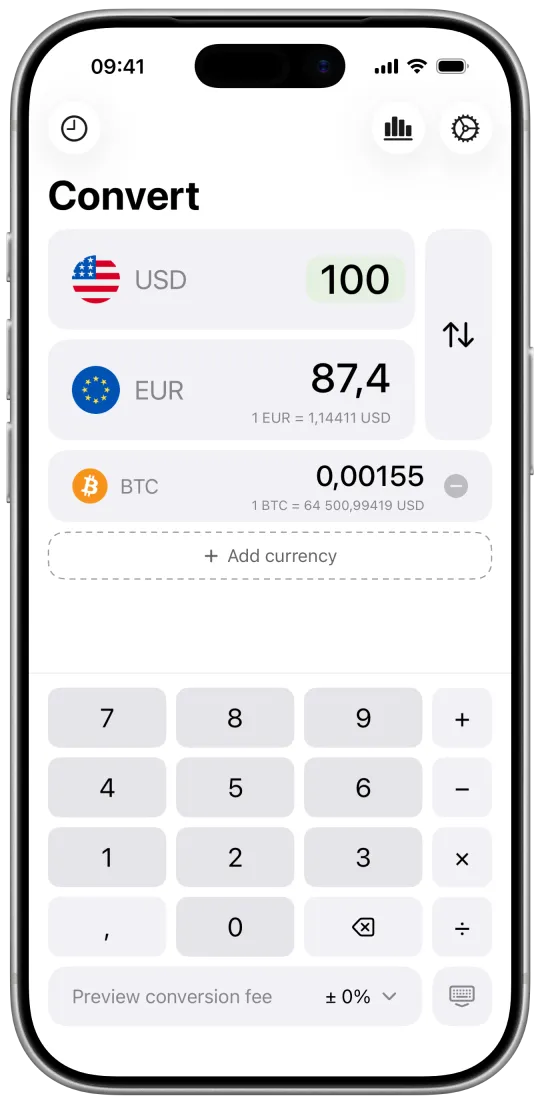
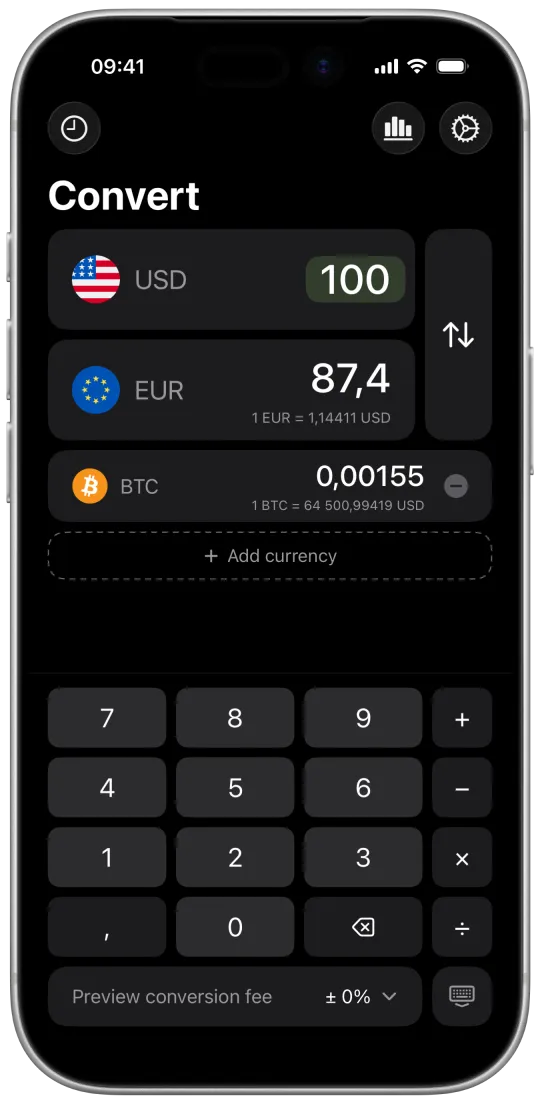
Every currency in these tables has a live page with its rate against the dollar, a one-year chart and conversions to 300+ other currencies. Start from the currency list, or keep the ones you care about on your Home Screen with the Live FX iPhone app, which covers 164 world currencies plus crypto and precious metals and works offline.
Frequently asked questions
What is the strongest currency in the world?
The Kuwaiti dinar is the highest-valued currency unit in the world: one dinar was worth about $3.21 (November 12, 2026). It has held the top spot for decades thanks to Kuwait's oil wealth and a peg to a basket of currencies.
Why is the Kuwaiti dinar so strong?
Kuwait has large oil export revenues and big sovereign reserves, a small population, and a central bank that manages the dinar against an undisclosed basket of major currencies rather than letting it float. When the dinar was introduced it was set at a high unit value, and stable management has kept it there.
Is the US dollar the strongest currency?
Not by unit value: at least eight currencies are worth more than one dollar. But the dollar is the world's most important currency: it is on one side of nearly 90% of all foreign-exchange trades and is the main reserve currency held by central banks.
What is the weakest currency in the world?
By unit value, the Iranian rial is the weakest in our data, at roughly 1.9 million rials per US dollar (November 12, 2026), followed by the Lebanese pound, Vietnamese dong, Lao kip and Indonesian rupiah. For currencies with capital controls, official and street rates can differ a lot.
Does a strong currency mean a strong economy?
No. The value of one unit depends largely on where the currency started and how many units circulate. Japan's yen is worth less than a US cent, yet Japan is one of the largest economies. What matters economically is how a currency's value changes over time and how widely it is used.
Sources
- Central Bank of Kuwait: Exchange rate policy
- Central Bank of Bahrain: Monetary policy (dinar peg)
- Central Bank of Oman: Fixed peg
- IMF: Jordan: staff-level agreement on the second review under the EFF (October 2024)
- Bank for International Settlements: OTC foreign exchange turnover in April 2025
Rates quoted in this guide are mid-market reference rates from Live FX’s data (the open currency-api dataset for fiat and metals, CoinGecko for crypto) and are for information only. Fees change, so check your own bank’s current terms before you travel.
Rates in your pocket, even offline
Live FX for iPhone converts 340+ currencies, crypto and gold in one tap, with charts, home-screen widgets and custom rates. Works without a connection using the last rates.