What Is a Stablecoin? USDT vs USDC Explained for Everyday Users
How stablecoins keep a $1 price, what backs USDT and USDC, the new US and EU rules, past de-pegs, and what it means if you use them to move money.
 Live FX Editorial Team · · 5 min read
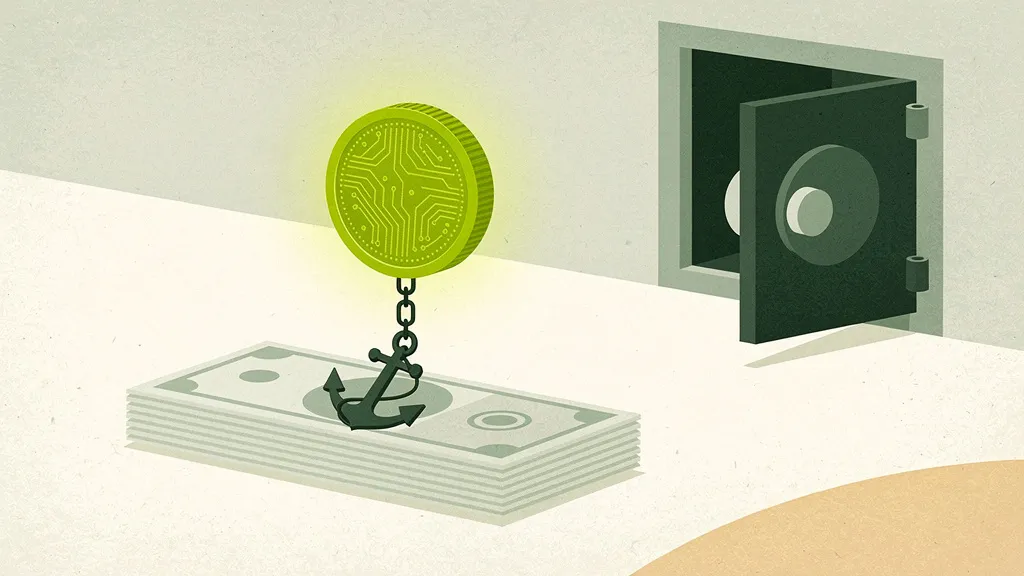
A stablecoin is a cryptocurrency designed to keep a steady value, usually $1, by holding reserves such as cash and short-term US Treasury bills that the issuer promises to redeem one-for-one. The two largest, Tether's USDT (about $176 billion in circulation) and Circle's USDC (about $69 billion), traded within a fraction of a cent of $1 on November 12, 2026, but a stablecoin is only as safe as its reserves and its issuer.
On this page
Most cryptocurrencies are famous for their price swings. Stablecoins are the opposite: they exist to not move. That makes them the bridge between ordinary money and crypto: traders park funds in them, exchanges price coins against them, and a growing number of people use them to hold dollars or send money across borders.
Market figures below come from Live FX’s CoinGecko data as of November 12, 2026, 22:30 UTC. See the live prices on the Tether (USDT) and USD Coin (USDC) pages.
How a stablecoin keeps its $1 price
A typical “fiat-backed” stablecoin works like a digital IOU:
- A customer (usually a business or exchange) sends dollars to the issuer.
- The issuer creates (mints) the same number of tokens and holds the dollars as reserves, mostly in cash and short-term US Treasury bills.
- Anyone holding a token can sell it on an exchange; approved customers can redeem it with the issuer for $1.
- If the market price drifts below $1, traders buy cheap tokens and redeem them for a full dollar, pushing the price back up. If it drifts above $1, the issuer mints more.
The IMF defines stablecoins as crypto assets that “aim to maintain a stable value relative to a specified asset”, and that arbitrage is how the big ones do it, usually trading within a fraction of a cent of their peg. On our reference date, USDT’s 24-hour range was $0.9989–$0.9993 and USDC’s was $0.9994–$0.9996.
The issuer earns money by keeping the interest on the reserves, which is why the business has grown quickly while interest rates have been above zero.
The main types
| Type | What backs it | Examples | Main risk |
|---|---|---|---|
| Fiat-backed | Cash, Treasury bills, money-market funds | USDT, USDC, PYUSD | The issuer, its banks and the quality of its reserves |
| Crypto-backed | Over-collateralized crypto locked in smart contracts | DAI / USDS | A sharp crash in the collateral or a smart-contract bug |
| Algorithmic (unbacked) | A trading mechanism and a sister token, not reserves | TerraUSD (collapsed 2022) | A loss of confidence becoming a death spiral |
| Commodity-backed | Physical gold in vaults | Tokens tracking one troy ounce of gold | Custody and redemption terms |
USDT vs USDC vs DAI
| Tether (USDT) | USD Coin (USDC) | Dai (DAI) | |
|---|---|---|---|
| Issuer | Tether | Circle | MakerDAO / Sky protocol |
| Market value (Nov 12, 2026) | about $175.7 billion | about $69.1 billion | about $4.5 billion |
| 24h trading volume | about $45 billion | about $13 billion | about $0.2 billion |
| Backing | Mostly US Treasuries and cash equivalents, plus other assets | Cash and short-dated US Treasuries | Crypto and real-world assets locked as collateral |
| Reserve reporting | Quarterly attestations | Monthly reports | On-chain, visible in real time |
| Typical use | Trading pairs on global exchanges, transfers in emerging markets | Payments, fintech apps, US and EU platforms | DeFi lending and borrowing |
Together, USDT and USDC made up roughly 10% of the whole crypto market’s value of about $2.4 trillion on our reference date, far more than they were a few years ago.
When stablecoins broke their peg
“Stable” is a goal, not a guarantee. Two episodes every user should know:
- TerraUSD (May 2022). An algorithmic stablecoin with no cash reserves. When holders rushed to exit, its mechanism printed more and more of its sister token LUNA, both collapsed, and tens of billions of dollars of value disappeared within days.
- USDC (March 2023). Circle disclosed that about $3.3 billion of its reserves was held at Silicon Valley Bank when the bank failed. USDC briefly traded as low as about 88 cents before US authorities guaranteed SVB’s deposits; it returned to $1 within days.
The lesson: a fully reserved stablecoin can wobble when its banks are in trouble, while an unbacked one can go to zero.
What actually backs USDT and USDC
- USDT. Tether’s attestation for September 30, 2026 (prepared by the accounting firm BDO) reported $191.5 billion of reserve assets against $183.5 billion of liabilities, an excess of about $8 billion. About $132.4 billion of the reserves were held in US Treasury bills directly or indirectly; the rest includes other assets such as gold and bitcoin, which can move in price.
- USDC. Circle holds most of its reserves in the Circle Reserve Fund, a US government money-market fund registered with the SEC that invests in cash, short-dated Treasuries and overnight repurchase agreements, with the remainder in cash at large banks. A Big Four accounting firm provides monthly assurance.
The rules in the US and the EU
- European Union: MiCA. Since June 30, 2024 the EU’s Markets in Crypto-Assets Regulation has required issuers of stablecoins (called e-money tokens and asset-referenced tokens) to be authorized, hold reserves and honor redemptions at par. Some exchanges have limited trading of non-compliant stablecoins for EU users.
- United States: GENIUS Act. Signed into law on July 18, 2025, it set up a federal framework for “payment stablecoins”: 100% reserve backing with liquid assets such as US dollars or short-term Treasuries, monthly public disclosure of reserve composition, and priority for token holders over all other creditors if an issuer fails.
Regulation lowers some risks, but a stablecoin balance is still not a bank deposit and is not covered by deposit insurance.
Should you use stablecoins to hold or move money?
Stablecoins can be genuinely useful:
- Cross-border transfers that settle in minutes, 24/7, often for low network fees.
- Holding dollars in countries with high inflation or limited access to dollar accounts.
- Moving between crypto exchanges without touching a bank.
But compare the whole cost and risk, not just the token:
- On- and off-ramp fees. Buying stablecoins with a card or selling them back to your bank can cost more than a cheap money-transfer service. Measure it against the mid-market rate.
- Wrong network, lost funds. USDT and USDC exist on several blockchains; sending on the wrong network can mean losing the money.
- Issuer and platform risk. If the exchange or wallet you use fails, your stablecoins can be frozen with it.
- Tax. In many countries, swapping crypto, including stablecoins, is a taxable event.
Converting stablecoins
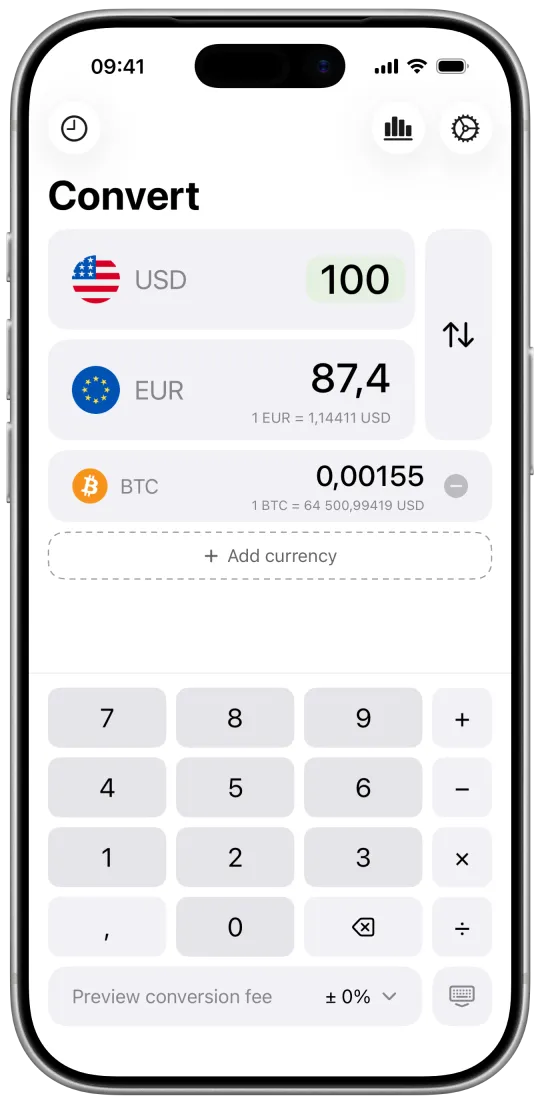
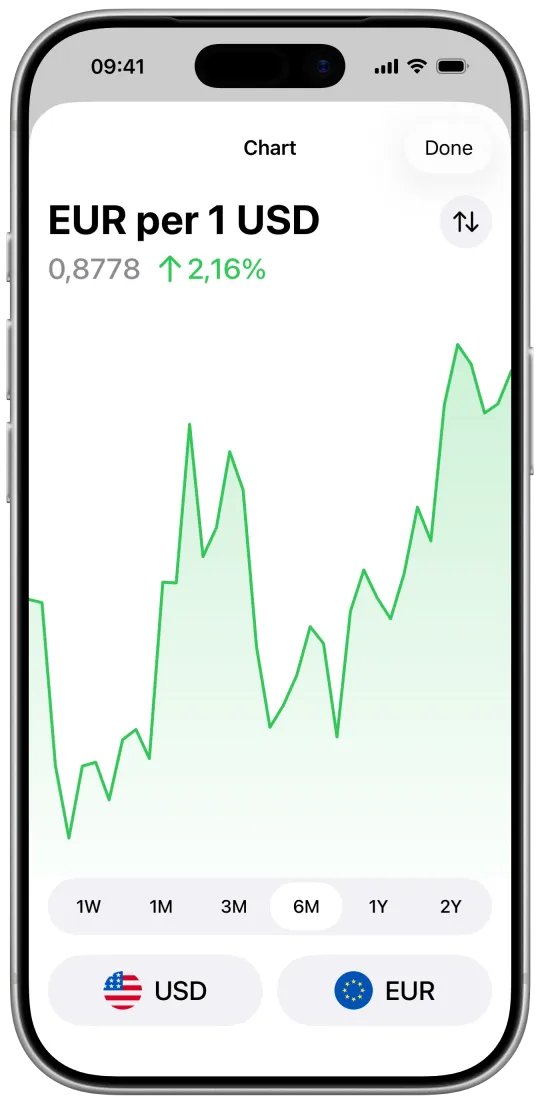
Because a stablecoin tracks the dollar, converting USDT or USDC to another currency is essentially the dollar rate, plus whatever spread your exchange charges. Check USDT to USD, USDT to EUR or USDC to USD to spot a de-peg or a bad quote. The Live FX iPhone app puts crypto, including stablecoins, alongside world currencies and gold in one converter, with charts to see whether a coin has held its peg.
Frequently asked questions
What is a stablecoin in simple terms?
A stablecoin is a digital token on a blockchain that aims to always be worth a fixed amount of a normal currency, usually one US dollar. The issuer holds reserves (mostly cash and short-term government debt) and lets approved customers swap tokens back for dollars.
Is USDT or USDC safer?
They differ more in transparency and regulation than in day-to-day price. USDC is issued by Circle, publishes monthly reserve reports and is designed around US regulation; USDT is issued by Tether, is larger and more widely used on exchanges, and publishes quarterly reserve attestations that include some riskier assets. Neither is a bank deposit or insured by a government.
Can a stablecoin lose its peg?
Yes. USDC briefly fell to about 88 cents in March 2023 when part of its reserves was stuck at the failed Silicon Valley Bank, and the algorithmic stablecoin TerraUSD collapsed almost to zero in May 2022. Fully reserved stablecoins have recovered from short de-pegs; unbacked ones have not.
Is a stablecoin the same as a cryptocurrency?
It runs on the same blockchains and is traded on crypto exchanges, so it is a type of crypto-asset. But unlike bitcoin or ether, its price is not supposed to move: it tracks a fiat currency.
Are stablecoins regulated?
Increasingly. The EU's MiCA regulation has applied rules to stablecoin issuers since June 30, 2024, and the US GENIUS Act, signed on July 18, 2025, created a federal framework requiring payment stablecoins to be backed one-to-one by cash or short-term Treasuries with regular public disclosure of reserves.
Sources
- IMF: Understanding Stablecoins (Departmental Paper, 2025)
- Circle: USDC transparency
- Tether: Q3 2026 attestation results (October 30, 2026)
- The White House: Fact sheet: GENIUS Act signed into law (July 18, 2025)
- Central Bank of Ireland: Markets in Crypto-Assets Regulation (MiCAR)
- Circle: $3.3 billion of USDC reserve risk removed (March 13, 2023)
- U.S. SEC: Charges against Terraform Labs and Do Kwon (2023)
Rates quoted in this guide are mid-market reference rates from Live FX’s data (the open currency-api dataset for fiat and metals, CoinGecko for crypto) and are for information only. Fees change, so check your own bank’s current terms before you travel.
Rates in your pocket, even offline
Live FX for iPhone converts 340+ currencies, crypto and gold in one tap, with charts, home-screen widgets and custom rates. Works without a connection using the last rates.