Currencies Before the Euro: Conversion Rates and Where to Exchange
Fixed euro conversion rates for all 21 former currencies, from the Deutsche Mark to the lev, what old notes are worth today and where to exchange them.
 Live FX Editorial Team · · 4 min read
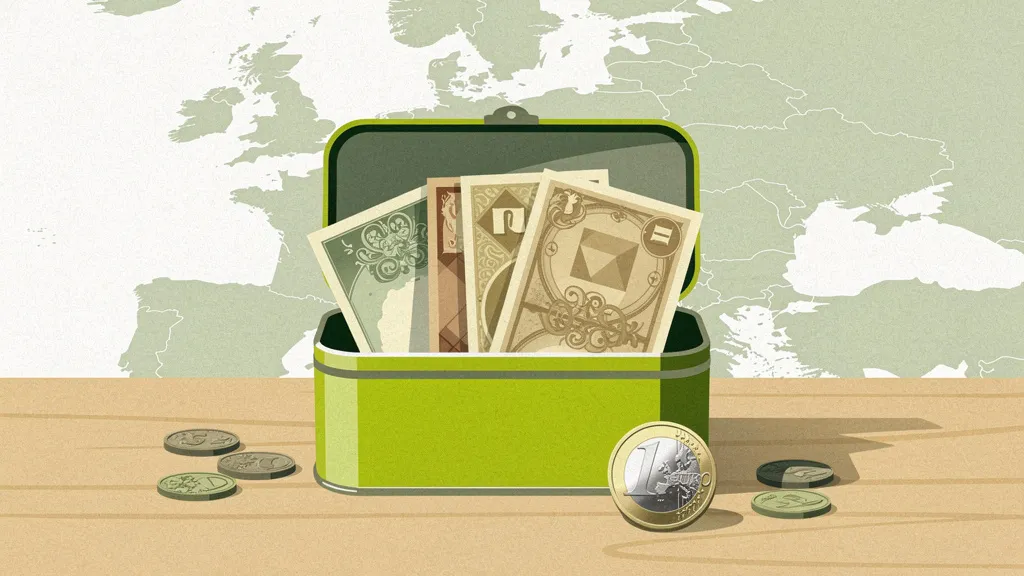
Each pre-euro currency was converted at a fixed, irrevocable rate, for example €1 = 1.95583 Deutsche Marks, 6.55957 French francs, 1,936.27 Italian lire or 166.386 Spanish pesetas. Old banknotes can still be exchanged for free with no deadline at the central banks of Germany, Austria, Ireland, Belgium, Luxembourg, Slovenia, Slovakia, the Baltic states, Croatia and Bulgaria, but the deadlines for French francs, lire, pesetas, drachmas and escudos have passed.
On this page
Twenty-one European Union countries have swapped their national currency for the euro, from the original eleven in 1999 to Bulgaria on January 1, 2026. Every one of those currencies was converted at a fixed, irrevocable rate, which means old prices, savings books and banknotes found in a drawer can still be converted exactly, and in many countries, the notes can still be turned into real euros.
US dollar values below use Live FX’s EUR/USD mid-market rate as of November 12, 2026 (€1 = $1.1077). Historic currencies on Live FX track the euro at their fixed rate, so their currency pages show today’s dollar value automatically.
The fixed euro conversion rates
| Currency | Code | Euro since | 1 euro = | 100 units = euros | 100 units = USD (Nov 12, 2026) |
|---|---|---|---|---|---|
| German mark | DEM | 1999 | 1.95583 | €51.13 | $56.64 |
| French franc | FRF | 1999 | 6.55957 | €15.24 | $16.89 |
| Italian lira | ITL | 1999 | 1,936.27 | €0.05 | $0.06 |
| Spanish peseta | ESP | 1999 | 166.386 | €0.60 | $0.67 |
| Dutch guilder | NLG | 1999 | 2.20371 | €45.38 | $50.27 |
| Belgian franc | BEF | 1999 | 40.3399 | €2.48 | $2.75 |
| Luxembourg franc | LUF | 1999 | 40.3399 | €2.48 | $2.75 |
| Austrian schilling | ATS | 1999 | 13.7603 | €7.27 | $8.05 |
| Finnish markka | FIM | 1999 | 5.94573 | €16.82 | $18.63 |
| Irish pound | IEP | 1999 | 0.787564 | €126.97 | $140.65 |
| Portuguese escudo | PTE | 1999 | 200.482 | €0.50 | $0.55 |
| Greek drachma | GRD | 2001 | 340.750 | €0.29 | $0.33 |
| Slovenian tolar | SIT | 2007 | 239.640 | €0.42 | $0.46 |
| Cypriot pound | CYP | 2008 | 0.585274 | €170.86 | $189.27 |
| Maltese lira | MTL | 2008 | 0.429300 | €232.94 | $258.03 |
| Slovak koruna | SKK | 2009 | 30.1260 | €3.32 | $3.68 |
| Estonian kroon | EEK | 2011 | 15.6466 | €6.39 | $7.08 |
| Latvian lats | LVL | 2014 | 0.702804 | €142.29 | $157.62 |
| Lithuanian litas | LTL | 2015 | 3.45280 | €28.96 | $32.08 |
| Croatian kuna | HRK | 2023 | 7.53450 | €13.27 | $14.70 |
| Bulgarian lev | BGN | 2026 | 1.95583 | €51.13 | $56.64 |
The rates come from EU law (Council Regulation 2866/98 and its later amendments), as listed by the European Central Bank. The Bulgarian lev was converted at the same 1.95583 as the Deutsche Mark. That is not a coincidence: under its currency board the lev was pegged to the mark from 1997 (one-for-one after a 1999 redenomination) and then to the euro at the mark’s rate.
How to convert an old amount
Divide by the fixed rate to get euros, then convert euros to any currency at today’s rate:
Euros = old amount ÷ fixed rate
- 500 Deutsche Marks → 500 ÷ 1.95583 = €255.65 → × 1.1077 = $283.18
- 10,000 pesetas → 10,000 ÷ 166.386 = €60.10
- 50,000 lire → 50,000 ÷ 1,936.27 = €25.82
Always divide by the full six-figure rate. Rounding the rate first (say, “2 marks to the euro”) produces wrong answers: EU rules (Regulation 1103/97) forbid rounding the conversion rates or using inverse rates for official conversions. You can also use the DEM to EUR, FRF to EUR, ITL to EUR or ESP to EUR converters.
Can you still exchange old banknotes and coins?
Only the national central bank of each country exchanges its old currency; commercial banks and the ECB don’t. Here is the status according to the ECB’s list:
| Currency | Banknotes | Coins |
|---|---|---|
| Deutsche Mark (Bundesbank) | No deadline | No deadline |
| Austrian schilling | No deadline | No deadline |
| Irish pound | No deadline | No deadline |
| Estonian kroon, Latvian lats, Lithuanian litas | No deadline | No deadline |
| Bulgarian lev | No deadline | No deadline |
| Belgian franc | No deadline | Ended Dec 31, 2004 |
| Luxembourg franc | No deadline | Ended Dec 31, 2004 |
| Slovenian tolar | No deadline | Ended Jan 3, 2017 |
| Slovak koruna | No deadline | Ended Jan 2, 2014 |
| Croatian kuna | No deadline | Ended Dec 31, 2025 |
| Dutch guilder | Until Jan 1, 2032 | Ended Jan 1, 2007 |
| Portuguese escudo | Ended Feb 28, 2022 | Ended Dec 31, 2002 |
| Spanish peseta | Ended Jun 30, 2021 | Ended Jun 30, 2021 |
| Maltese lira | Ended Jan 31, 2018 | Ended Feb 1, 2010 |
| Cypriot pound | Ended Dec 31, 2017 | Ended Dec 31, 2009 |
| Greek drachma | Ended Mar 1, 2012 | Ended Mar 1, 2004 |
| Finnish markka | Ended Feb 29, 2012 | Ended Feb 29, 2012 |
| French franc | Ended Feb 17, 2012 | Ended Feb 17, 2005 |
| Italian lira | Ended Dec 6, 2011 | Ended Dec 6, 2011 |
A few practical points:
- Germany is the most generous: the Bundesbank exchanges any quantity of D-Mark notes and coins free of charge, at its branches or by post.
- The Netherlands has an exception: De Nederlandsche Bank does not exchange guilders obtained through commercial activity after January 27, 2002.
- Bulgaria completed its changeover recently. The lev and euro circulated side by side until February 1, 2026; the Bulgarian National Bank continues to exchange leva free of charge with no deadline.
- Check the central bank’s own website before you travel or post anything: opening hours, ID requirements and limits on mailed exchanges vary.
Old notes that can’t be exchanged
If the deadline has passed (French francs, lire, pesetas, drachmas, escudos, markkas), the notes have no exchange value at any bank. Some are worth something to collectors, especially rare series or notes in uncirculated condition, but most common notes sell for little. A coin or banknote dealer can tell you whether yours are special.
Pre-euro prices and nostalgia
Fixed rates are also handy for comparing old prices with today’s. A 1998 price of 3 Deutsche Marks for a coffee is €1.53 at the conversion rate, but remember that converting doesn’t adjust for inflation. To compare purchasing power, you need an inflation calculator as well as the conversion rate.
All historic currencies in one place
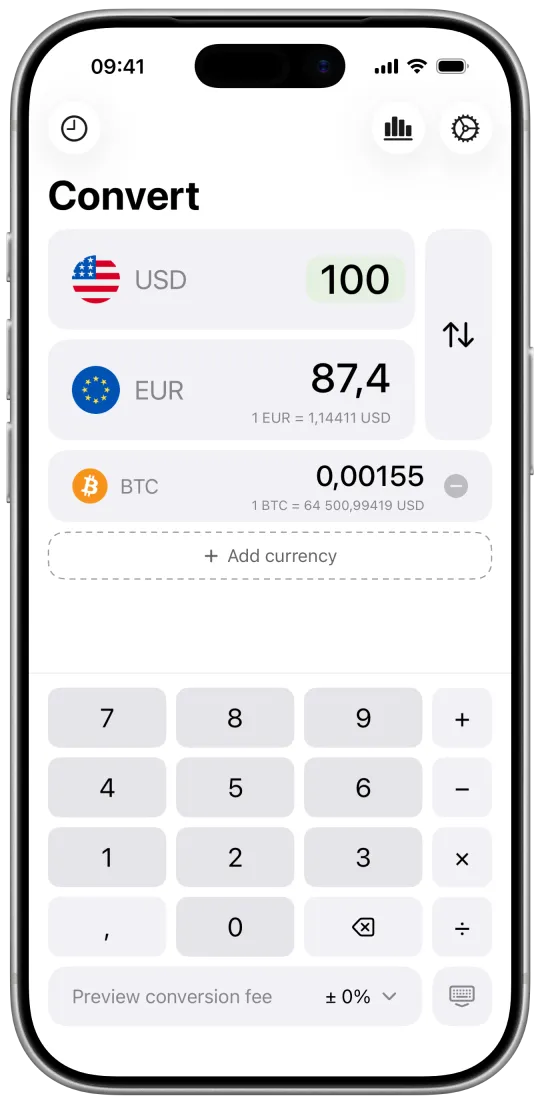
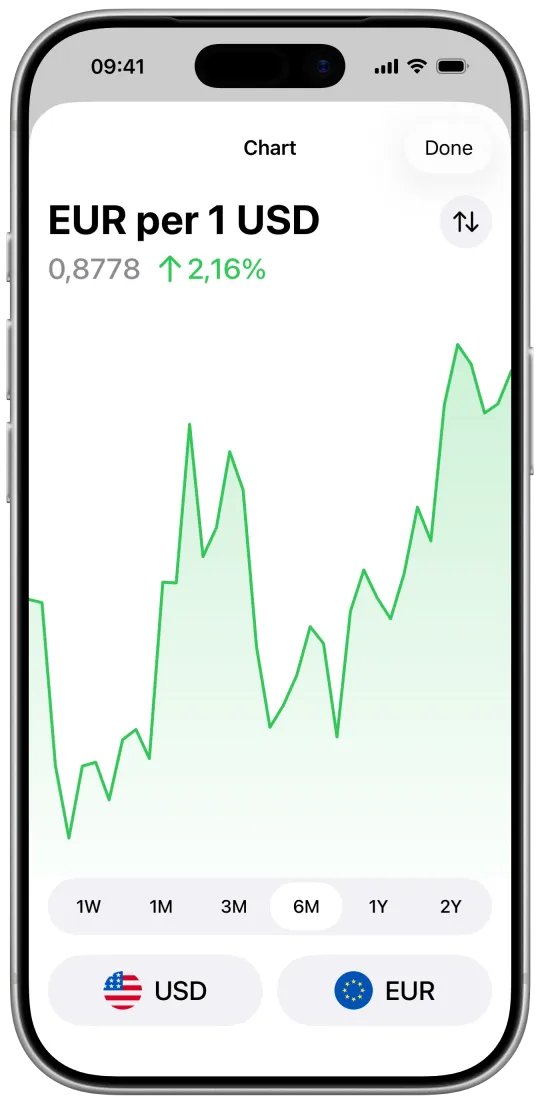
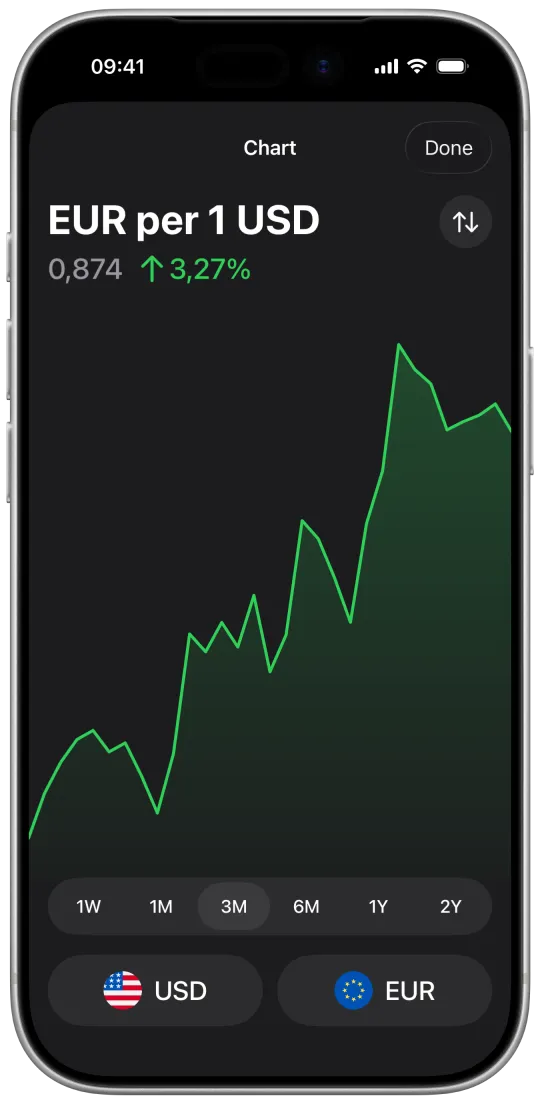
Live FX tracks 38 historic currencies, including all the pre-euro ones, alongside today’s 164 world currencies. Browse them on the historic currencies page, or keep them in the Live FX iPhone app if you deal with old contracts, collections or family savings books.
Frequently asked questions
Can I still exchange Deutsche Marks for euros?
Yes. The Deutsche Bundesbank exchanges Deutsche Mark banknotes and coins for euros free of charge with no time limit, at the fixed rate of 1.95583 DM per euro. You can go to a Bundesbank branch or send them by post.
How much is 100 Deutsche Marks in euros?
100 DM is €51.13, because the fixed rate is 1.95583 DM per euro (100 ÷ 1.95583). At the EUR/USD rate of November 12, 2026, that is about $56.64.
Can I still exchange French francs, Italian lire or Spanish pesetas?
No. The Banque de France stopped exchanging franc banknotes on February 17, 2012, the Bank of Italy stopped exchanging lire on December 6, 2011, and the Bank of Spain's deadline for pesetas ended on June 30, 2021. Old notes now have only collector value.
Which countries' old currency can still be exchanged?
Banknotes can still be exchanged without a deadline in Germany, Austria, Ireland, Belgium, Luxembourg, Slovenia, Slovakia, Estonia, Latvia, Lithuania, Croatia and Bulgaria. Dutch guilder notes can be exchanged until January 1, 2032. Coins have shorter deadlines in several of these countries.
Why are the euro conversion rates so precise?
They were fixed to six significant figures by EU regulation so that conversions would be exact and identical everywhere. The rates for the first 11 currencies were set on December 31, 1998 and became irrevocable on January 1, 1999.
Sources
- European Central Bank: Fixed euro conversion rates
- European Central Bank: Exchange of national banknotes and coins
- European Central Bank: Bulgaria's changeover to the euro
Rates quoted in this guide are mid-market reference rates from Live FX’s data (the open currency-api dataset for fiat and metals, CoinGecko for crypto) and are for information only. Fees change, so check your own bank’s current terms before you travel.
Rates in your pocket, even offline
Live FX for iPhone converts 340+ currencies, crypto and gold in one tap, with charts, home-screen widgets and custom rates. Works without a connection using the last rates.